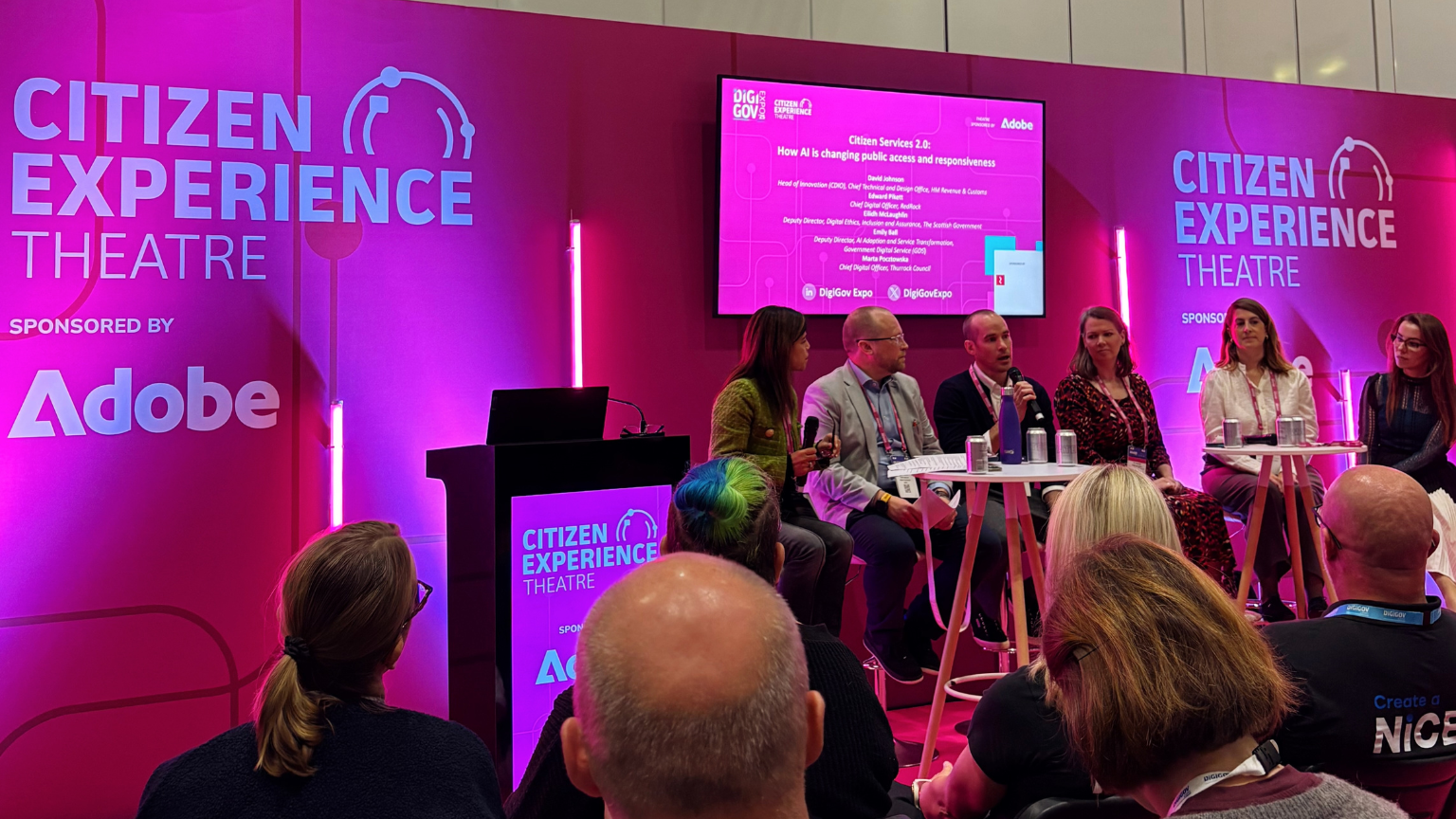
AI is beginning to reshape how citizens interact with public services, and how governments deliver them. At a recent panel at DigiGov 2025, I was part of a discussion exploring the complexities of making reuse work in practice and how it can help to make government digital more efficient and collaborative. Here’s several key themes from the discussion that are emerging across departments and local authorities:
1. From Active Requests to Proactive Services
Citizens increasingly want government services to “just work” in the background, from renewing passports to paying taxes, without requiring multiple applications. AI has the potential to enable this shift towards proactive, seamless service delivery, reducing the need for repeated interactions.
2. Improving Access and Inclusion
AI can support accessibility by:
- Offering real-time translation and transcription, so services are available across languages and for people with disabilities.
- Personalising services so citizens get tailored information and guidance.
- Helping less confident or digitally excluded users navigate complex processes more easily.
3. Efficiency and Responsiveness
AI is already being used in practice:
- HMRC uses natural language processing to guide customers, route correspondence, and automate routine tasks.
- Local councils use AI transcription tools to free up social workers’ time, reducing backlogs and improving face-to-face support.
- Scottish Government applies AI to speed up Freedom of Information redaction, saving staff time and improving transparency.
- Here at RedRock we use AI to rapidly prototype solutions in real time during client design sprints.
These efficiencies allow staff to focus on higher-value, human-centred work.
4. Trust, Transparency and Ethics
Public trust is essential. People are willing to share data if they see real benefits, but concerns remain around privacy, security, and overreach. Governments are beginning to introduce registers of AI use, transparency standards, and clear governance frameworks to show citizens how AI is applied responsibly.
5. Cultural and Organisational Change
Technology alone won’t deliver transformation. Public servants need training, leadership, and safe spaces to experiment. AI must be embedded into ways of working, not as a replacement for people, but as a tool to augment them.
In Summary
AI is accelerating government’s long-standing goals: more joined-up services, less administrative burden, faster responses, and improved inclusion. Success will depend not only on technology, but on building trust, designing ethically, and ensuring staff and citizens both feel supported.

Explore associated information
-

-
 Insight
The Reality of Digital Transformation: Hard Truths, Human Lessons, Real Outcomes
12 February 2026- Blog
- Technology
-


Ready to talk?
See how we can deliver the positive change you need. Talk to one of the team today.