
We attended TechEx Global 2026 at Olympia London this week, and left with a host of valuable insights. Across the various themes spanning AI, cyber security, IoT, digital transformation and infrastructure, the focus was clear at this year’s event: helping organisations prioritise investment, strengthen decision-making and deliver transformation at scale.
After the team attended sessions, met with technology leaders and explored real-world case studies, five major themes stood out, each with practical implications for organisations shaping their technology and business strategies in the year ahead.
1. Embedding AI into Core Business Operations
Artificial intelligence dominated the agenda, but the conversation has clearly evolved. Rather than speculative discussions, speakers focused on enterprise-ready applications and measurable business outcomes.
We saw strong momentum around generative AI, intelligent interfaces and AI embedded directly into operational workflows, enabling smarter automation, improved decision-making and enhanced customer experiences. Organisations are moving beyond proof-of-concept projects to scaled deployment, integrating AI into analytics, security, operations and service delivery, taking a holistic view to its adoption, with a focus on measurable impact.
A common theme from across the event demonstrated that the next challenge is governance and integration. As AI moves deeper into core systems, success will depend on robust data strategies, ethical frameworks and clear performance metrics that link AI initiatives directly to business value.
2. Cyber Security and Cloud Resilience are becoming Strategic Foundations
In terms of security and operational resilience, one message was consistent at the event: cyber security is no longer just a defensive capability, it is a strategic enabler of digital transformation.
Sessions explored AI-driven threat detection, hybrid and multi-cloud security strategies, and the growing importance of Zero Trust architectures in distributed environments. With the rise of AI-generated threats and increasingly complex digital ecosystems, organisations must evolve beyond traditional perimeter-based defence models.
We observed strong emphasis on embedding security into organisational culture and development lifecycles, shifting left and designing resilience from the outset, making it a key driver of transformation as opposed to simply acting as a protective measure. For executive teams, cybersecurity is becoming a board-level priority tied directly to business continuity, customer trust and regulatory confidence.
3. Operational Transformation is being driven by Smart, Connected Ecosystems
The IoT and edge computing sessions we attended demonstrated how connected systems are delivering tangible operational improvements across sectors including manufacturing, logistics, infrastructure and utilities.
Real-world case studies showcased how organisations are using sensors, edge analytics and digital twins to enable real-time automation and data-driven decision-making at the network edge. This shift is allowing businesses to move faster, respond to changing conditions and unlock new service models built on continuous data flows.
However, scaling connected ecosystems introduces new complexity, particularly around data governance, interoperability and security. Organisations need clear architectural frameworks and operational models to ensure that connected infrastructure remains scalable, secure and aligned with long-term business objectives.
4. Aligning Technology Strategy with Business Outcomes
The discussions around digital transformation went far beyond the prospect of adopting new tools and investing in new technology. Instead, the focus was on reshaping enterprise architecture, operational culture and decision-making processes to enable sustainable change.
A number of sessions highlighted the importance of modern digital architecture, data-led leadership and cloud optimisation strategies that balance innovation with governance. Many speakers reinforced that successful transformation requires alignment between business strategy and technology investment, ensuring that initiatives are measurable, outcome-driven and supported by the right organisational capabilities.
From our conversations with clients and peers at the event, it’s clear that transformation programmes are increasingly judged not by technological sophistication alone, but by their ability to deliver measurable business results aligned to strategic goals, whether through cost efficiency, growth enablement or improved customer outcomes.
5. Powering Sustainable Digital Growth Through Smarter Architecture
As AI adoption and cloud workloads expand, infrastructure and sustainability have become central concerns for technology leaders. Dedicated sessions on data centres and infrastructure highlighted the need for scalable, resilient and energy-efficient environments capable of supporting next-generation enterprise workloads.
Topics included high-performance architecture design, hybrid infrastructure models, cooling optimisation and the integration of renewable energy strategies. Organisations are under pressure to support rapid digital growth without unsustainable increases in operational cost or carbon footprint.
It became clear that infrastructure decisions are no longer purely technical, they are strategic choices that shape organisational resilience, innovation capacity and environmental impact.
Looking Ahead: Integration, Execution and Real Business Value
TechEx Global 2026 reinforced a clear message: the future of enterprise technology lies in integration and execution rather than isolated innovation. Across AI, cloud, cybersecurity, IoT and infrastructure, the most successful organisations are those building cohesive strategies that connect technology investment directly to business outcomes.
The event highlighted the importance of helping organisations move beyond experimentation, towards disciplined delivery, strong governance and architectures designed for long-term adaptability.
As digital ecosystems become more complex, leaders must balance innovation with resilience, and ambition with practical execution. Those who succeed will be the organisations that embed technology into the fabric of their business strategy, using it not only to transform operations but to unlock sustainable growth and competitive advantage.
We look forward to continuing these conversations with clients and partners as we help organisations turn insight into action and contribute to building the next generation of resilient, data-driven enterprises.





Explore associated information
-

-
-
 Insight
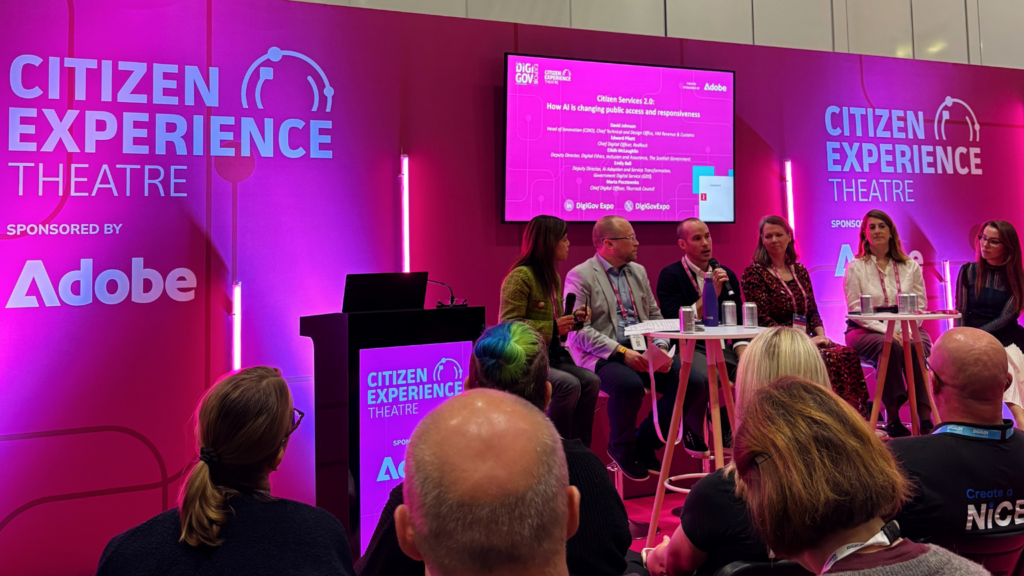
How AI is Changing Public Access and Responsiveness in Government
8 September 2025
- Blog
- Technology

Ready to talk?
See how we can deliver the positive change you need. Talk to one of the team today.