
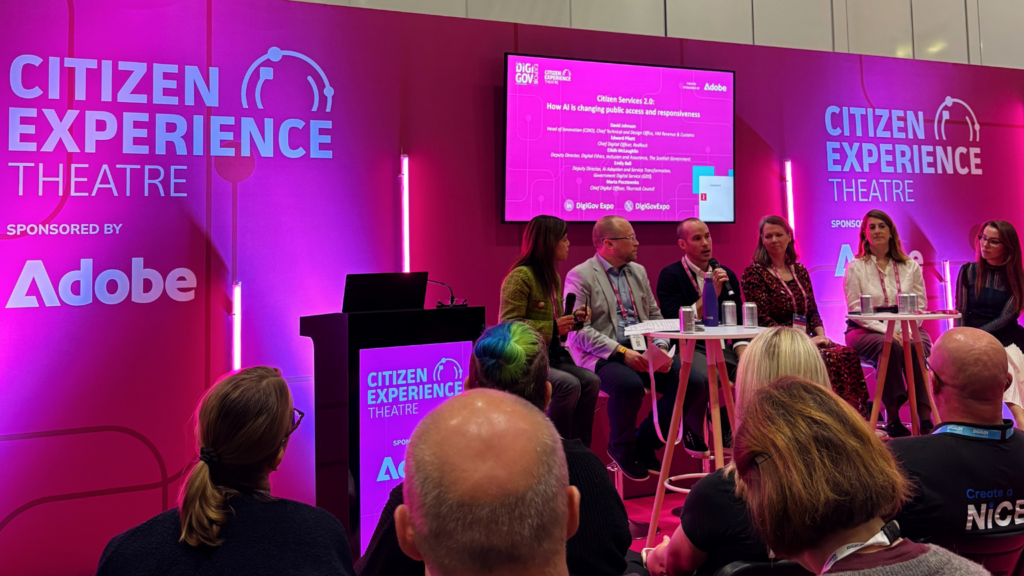
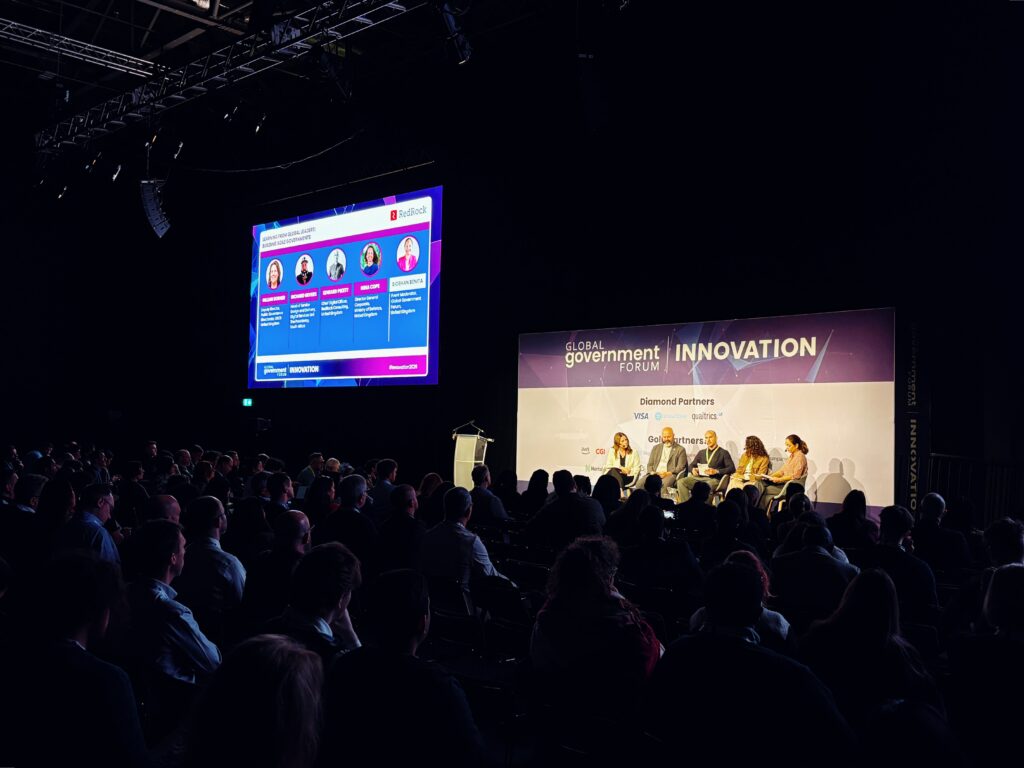
One week on from attending DigiGov 2025, we thought we’d share some of the key themes from what was a brilliant event, full of thought-provoking conversations and discussions. Across the range of keynote presentations and panel sessions over two days at the Excel, we came away with a host of insights into how AI is reshaping the Public Sector. It is clear that AI is no longer a future vision, it’s being used across public services and is transforming them as we speak. Here’s the five core themes we noticed from the event and what leaders across Government need to focus on in order to make the most of this significant shift.
Increasing trust in Public Services technology
A critical factor in building the foundation for successful AI adoption that came across in almost every session we attended was the importance of building trust. It remains at the centre of citizen needs, as they demand transparency, fairness and accountability when it comes to the introduction of AI into services that impact their lives.
A number of speakers stressed the importance of clear communication around how AI is being used in Government to make decisions, with avoiding bias and safeguarding privacy two of the areas of most significant concern to citizens. There was agreement across the two days from many panellists that embedding ethical frameworks and placing transparency at the centre of AI design and deployment should be a key focus for public sector leaders, in order to for changes to not only be accepted by citizens, but for the rationale behind them to be understood.
Streamlining services and citizen touchpoints
With AI enabling unprecedented efficiency in public services, we heard a number of speakers share their perspectives on how Government departments can streamline processes, reduce duplication and making interactions more seamless for citizens by integrating intelligent automation.
The presentations we attended showcased the power of AI in a number of areas, from enabling automated case management in welfare services to predictive analytics being used for resource allocation in healthcare. This is not only resulting in faster service delivery, it is also providing a reduction in administrative burden, granting public servants with more time to focus on higher-value work and tasks that require human judgement.
Greater personalisation and more accessible services
We noticed a focus on tailoring services specifically to user needs, in line with increasing expectations from citizens for greater personalisation. With AI, this is made possible at scale by extensive data analysis to personalise interactions and outputs, all while ensuring accessible services for everyone.
Panel sessions and presentations shared examples of voice-activated public service portals, as well as AI-driven chatbots that assist users in multiple languages, demonstrated significant advancements, together with the potential to continue removing barriers to access for citizens in the future. Public sector leaders also shared how they are exploring how AI can deliver services in ways that respect diversity, improve inclusivity and adapt to the differing needs of various communities.
Using the right metrics and delivering the right outcomes
The event reinforced the importance of focusing on the right metrics, the ones that truly measure impact as opposed to simply highlighting activity, and numerous speakers outlined that effective AI deployment depends on defining clear outcomes and aligning data collection to those core objectives from the outset.
We’ve found with a number of our clients that this approach ensures that technology drives meaningful change, as opposed to simply producing more data. The challenge for Government in this sense is to combine detailed AI insights with diverse perspectives in order to improve policy making and avoid blind spots.
Simplifying information and communication
We were reminded at various sessions across the two days just how much of a growing challenge information overload is becoming for both Government and citizens alike. The need for AI to help simplify communications by distilling complex information into clear, understandable formats and digitising communications using the platforms where they will reach citizens has never been greater.
Breaking down information not only aids accessibility for citizens, it also builds greater trust by ensuring they feel informed, heard and engaged, which should always be the core concern for Government.
In Summary
DigiGov 2025 highlighted to us that AI in the public sector is not about replacing humans, but augmenting them. The technology’s potential will be fully realised when Governments are able to combine technical innovation with a mindset and culture than prioritises trust, inclusivity and measurable impact, a balance that is both challenging and achievable in the long term.
As public services continue to embrace AI, leaders must combine efficiency and automation with human insight, accessibility and effective data management. The future of Government not only lies in technology, but in the ability to use it both wisely and effectively for the benefit of the citizens they serve.




Explore associated information
-

-
 Insight
How AI is Changing Public Access and Responsiveness in Government
8 September 2025
- Blog
- Technology
-
Ready to talk?
See how we can deliver the positive change you need. Talk to one of the team today.